If you’ve looked at our ingredient list, you’ll have noticed something unusual. L-Theanine appears twice. Once in the AM formula at 200mg. Again in the PM formula at 200mg. That’s 400mg total per day.
This wasn’t a mistake. It wasn’t because we ran out of ideas. It’s because L-Theanine does different things depending on when you take it and what you pair it with.
What L-Theanine actually is
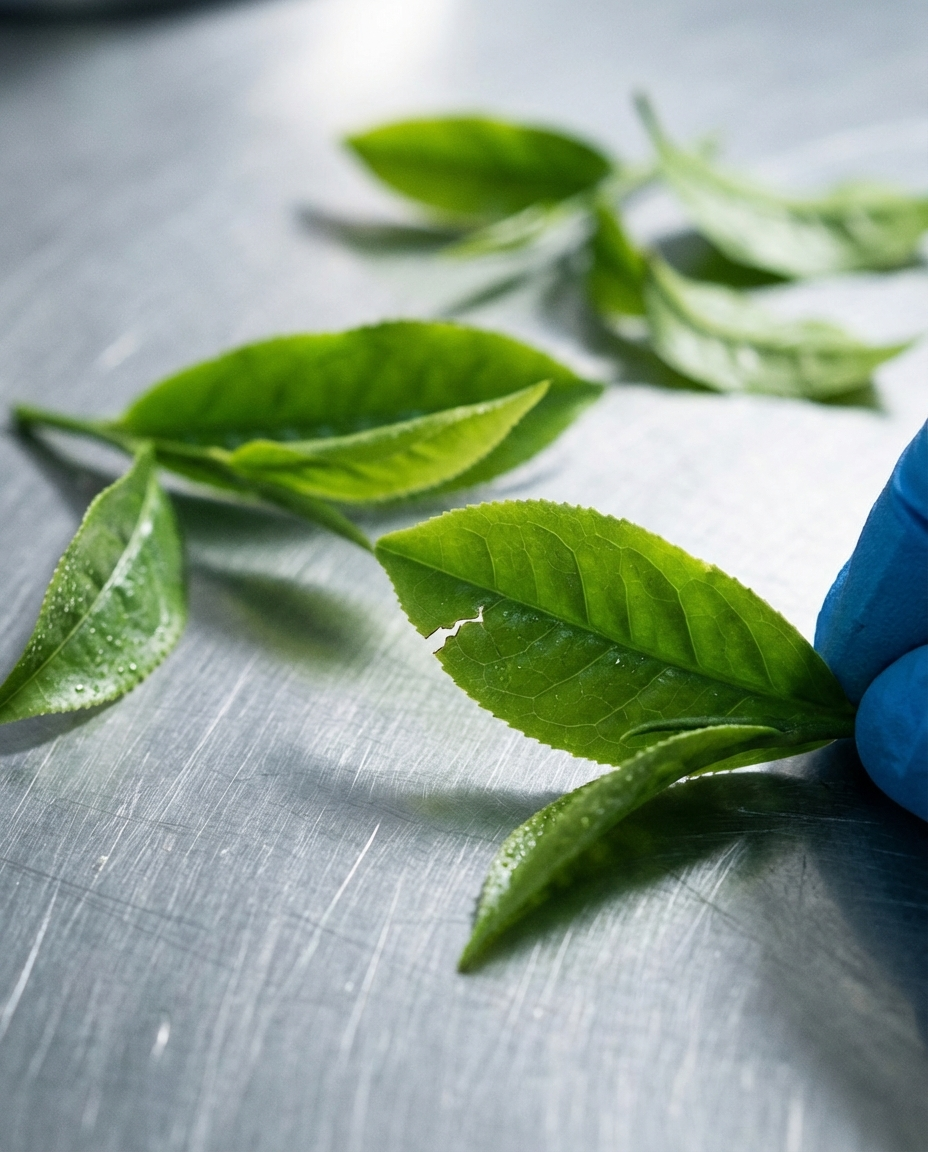
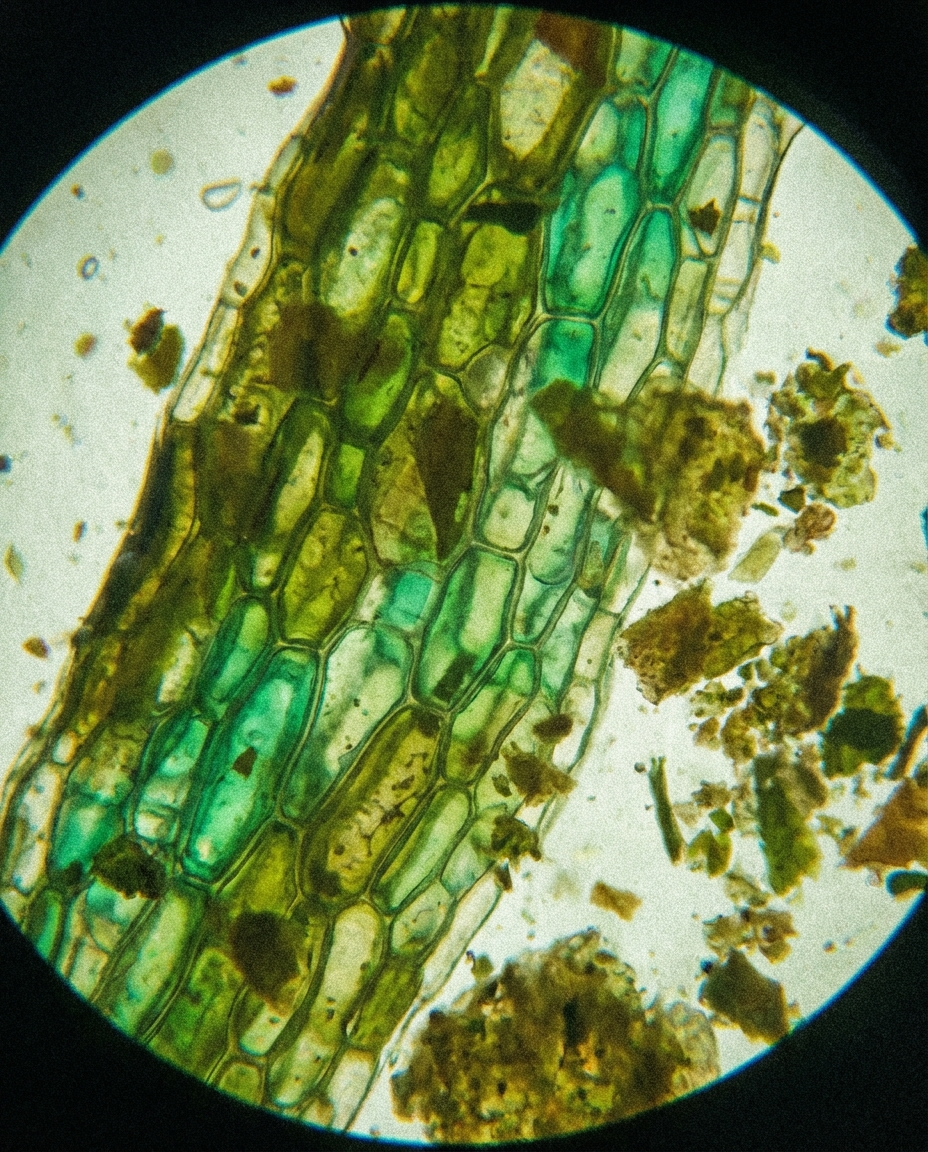
L-Theanine is an amino acid found naturally in green tea leaves. It’s one of the reasons tea produces a different kind of alertness compared to coffee. Where caffeine creates a spike, L-Theanine creates a focused calm. It crosses the blood-brain barrier within 30 to 45 minutes and increases alpha brain wave activity, the same pattern associated with relaxed concentration.
We source ours from decaffeinated green tea extract specifically. Not synthesised in a lab. Decaffeinated because we deliberately chose not to include any stimulants like caffeine in the formula. This matters for three reasons: bioavailability is better from natural sources, standalone L-Theanine (not from tea) falls under Novel Food regulations in the UK, and removing the caffeine means the PM dose supports sleep without any stimulant interference.
L-Theanine (from Green Tea)
200mg AM + 200mg PM
400mg total daily dose. Sourced from green tea extract to avoid Novel Food classification. Crosses the blood-brain barrier in 30 to 45 minutes. Increases alpha wave activity for focused calm without drowsiness.
The AM role: calm focus under pressure
In the morning formula, L-Theanine works alongside Rhodiola, Lion’s Mane, and NALT to create what we call “productive patience.” It smooths the stimulating effects of the other nootropics without dulling them.
The research is clear on this. A 2019 randomised controlled trial found that 200mg of L-Theanine significantly improved attention and working memory in adults under cognitive stress. Participants weren’t calmer in a sleepy sense. They were calmer in a “handle the chaos” sense.
of fathers in our survey reported irritability or short temper as a regular symptom. L-Theanine’s effect on alpha waves directly supports the kind of emotional regulation that frays first when you’re depleted.
For a father, this looks like the difference between snapping at your partner because the kids are screaming and being able to take a breath first. It’s not a personality change. It’s giving your brain the raw material it needs to do what it’s already trying to do.
The PM role: deeper recovery from less sleep
In the evening formula, the same 200mg of L-Theanine does something different. Without the stimulating companions, it works with Lemon Balm, Chamomile, and L-Tryptophan to prepare your nervous system for sleep.
Here’s the key insight: L-Theanine doesn’t sedate you. It reduces the time it takes for your brain to shift from high-beta (stressed, wired) to alpha (relaxed, ready for sleep). For fathers who get maybe a 45-minute window between the kids going down and their own bedtime, that transition speed matters enormously.
Passing out at 11pm isn’t the same as sleeping. Your brain needs to transition through stages, and if you’re still in fight-or-flight mode from the day, the quality of whatever sleep you get is compromised.
A 2011 study in the Journal of Functional Foods found that L-Theanine supplementation improved sleep quality not by increasing total sleep time, but by improving sleep efficiency. The percentage of time in bed that’s actually spent in restorative stages. For fathers who can’t control the quantity of their sleep, improving the quality of whatever hours they get is the entire strategy.
L-Theanine is one of 21 ingredients
400mg total daily dose across both formulas. Founding Father pricing for the first 500 subscribers.
Why not just take 400mg once?
Timing matters. L-Theanine has a half-life of roughly 2.5 to 3 hours. If you take 400mg at breakfast, the effect is largely gone by early afternoon. By splitting the dose, you get focused calm during the morning when you need to perform, and relaxation support in the evening when you need to wind down.
Most brands include L-Theanine in a single daily capsule. Usually at 100 to 150mg. Below the doses used in most clinical trials. We could have done the same thing and saved money per unit. But a dose that looks good on a label and a dose that actually works in your body are two different things.
The evidence base
L-Theanine is one of the more well-studied natural compounds for cognitive function and stress. It’s not in the “promising but needs more research” category. There are multiple randomised controlled trials, systematic reviews, and meta-analyses supporting its effects on:
Attention and focus: improved sustained attention under stress conditions. Sleep quality: enhanced sleep efficiency without sedation. Stress response: reduced cortisol and subjective stress markers. Cognitive performance: improved working memory, particularly when combined with other nootropics.
This is why L-Theanine earned its place in both formulas. Not because it’s trendy. Because the evidence says it works, at the right dose, taken at the right time.
Sources
- Hidese S, et al. Effects of L-Theanine Administration on Stress-Related Symptoms and Cognitive Functions. Nutrients. 2019;11(10):2362.
- Nobre AC, Rao A, Owen GN. L-theanine, a natural constituent in tea, and its effect on mental state. Asia Pac J Clin Nutr. 2008;17 Suppl 1:167-8.
- Lyon MR, Kapoor MP, Juneja LR. The effects of L-theanine on objective sleep quality. Journal of Functional Foods. 2011;3(3):170-178.
- Kimura K, et al. L-Theanine reduces psychological and physiological stress responses. Biol Psychol. 2007;74(1):39-45.